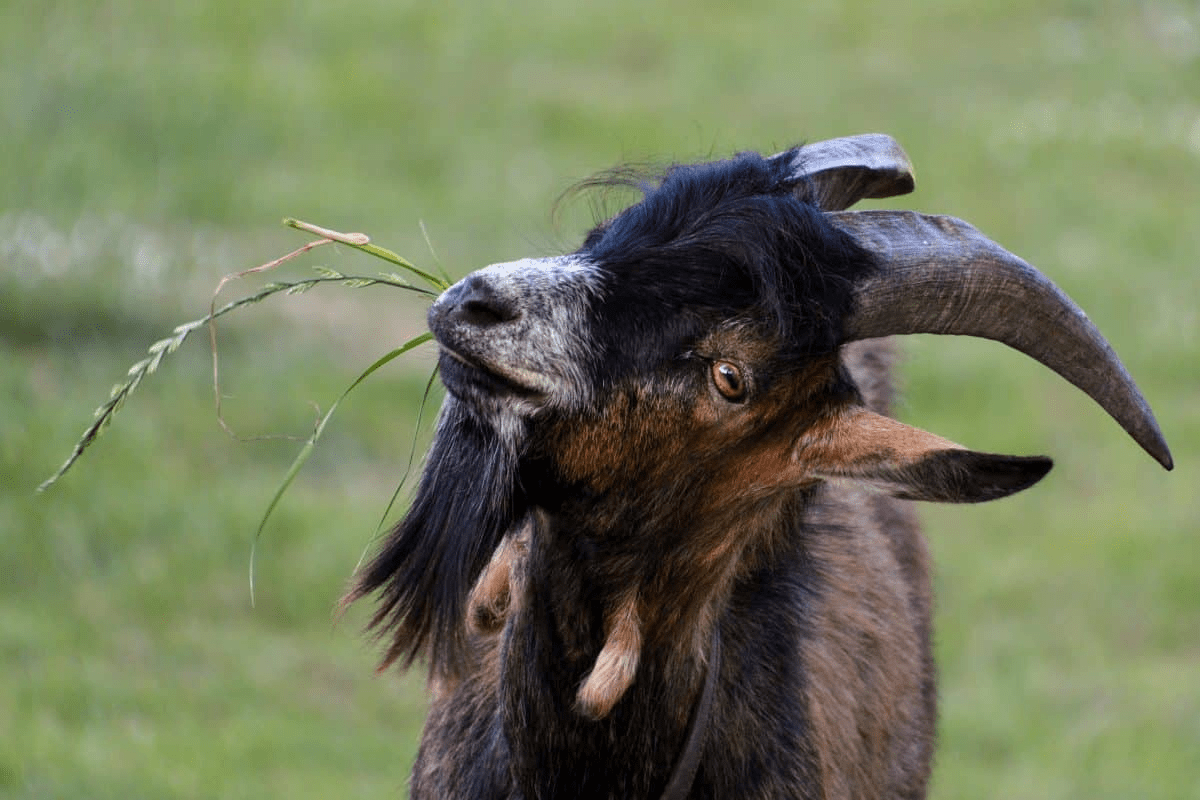
My Masonic lodge is housed in a building that used to be a church, which has a belltower. A Brother recently joked that the belltower is where we keep the goat. It is an old jest, and a good one. But like most good jests, it rests on something older and worth a moment’s reflection. Where did our goat come from, and what has the poor creature ever done to deserve his long tenancy in the folklore of the Craft?
The goat is one of the oldest symbols mankind has troubled to interpret, and he has never sat still under a single meaning. To the ancients he was fertility and abundance, the surefooted climber who thrived where other animals would not go. To the Greeks he belonged to Pan and to Dionysus, representing wildness, revelry, the untamed edge of things. In later years, Judeo-Christian tradition set the goat against the sheep, with the scapegoat carrying away the sins of the people into the wilderness, and in time the horned goat became, in the minds of the superstitious, an emblem of the Devil himself.
This last association gave us the lodge goat, though not in the way outsiders once feared. Freemasonry’s rituals are secret by nature. In the nineteenth century, when suspicion of this secrecy ran high, critics were pleased to imagine that a candidate, in the dark of his initiation, was made to “ride the goat”, with the animal standing in for something diabolical and hidden. There was, of course, no goat, and nothing diabolical. But rather than protest a fantasy, our forebearers took the right tack. They laughed, and made the goat their own. Toy goats, mechanical “goat-riding” contraptions, and cartoons became lodge humor, an inside joke shared among Brothers who knew the truth and enjoyed the rumor.
There is, I think, a lesson tucked inside the joke. The goat feared by outsiders was a creature of ignorance. It was a shadow cast by not knowing what happens within the walls of the Lodge. The goat we keep is a creature of good humor, a reminder that the Craft has always met suspicion not with defensiveness but with light, patience, and a good laugh. What our critics imagined as something sinister in the tower is, in truth, only the laughter of men who understand each other.
So let the goat keep his place in the belltower. He guards nothing more than our willingness to take the work seriously without taking ourselves too seriously. That is, perhaps, no small part of the work itself.